
Language
Views: 0 Author: Site Editor Publish Time: 2026-06-17 Origin: Site


Specify night vision equipment based solely on top-line marketing numbers, and you risk severe tactical failure. Operating in zero-light environments demands absolute equipment reliability, yet translating manufacturer data sheets into actual field performance remains a complex challenge for procurement officers. Teams frequently over-index on Figure of Merit (FOM) while ignoring critical sub-metrics like Equivalent Background Illumination (EBI), Signal-to-Noise Ratio (SNR), and specific zone blemishes. This imbalance degrades operator visibility exactly when it matters most. Evaluating a true military grade I2 tube requires a holistic framework. You must balance base resolution, light amplification thresholds, and spectral sensitivity against real-world environmental resilience and strict regulatory compliance. This guide provides an evidence-based framework for shortlisting components, verifying specifications, and ensuring optimal operational readiness before field deployment.
FOM is a Composite, Not a Guarantee: A high-FOM image tube is not inherently superior; a tube with high resolution but low SNR can yield the same FOM as a balanced tube but will severely underperform in extreme dark.
SNR is the Primary Low-Light Driver: Signal-to-Noise Ratio dictates image clarity and the presence of "snow" (scintillation) under true starlight conditions, making it the most critical metric for operational effectiveness.
Spectral Range and Environment Dictate Generational Choice: The choice between US Gen 3 (unfilmed/thin-filmed) and European 4G (wide spectral band) depends entirely on the operational theater (e.g., deep rural vs. dynamic urban).
Data Sheets Dictate Reality: Navigating strict Zone 1-3 blemish tolerances (measured in thousandths of an inch) and halo specifications separates true military-spec grading from commercial-grade fallouts.
Compliance and Export Realities: Securing a Gen3 FOM2200 tube requires navigating strict ITAR (International Traffic in Arms Regulations) or EAR (Export Administration Regulations) frameworks depending on the country of end-use.
Night vision operations rely heavily on the photoelectric effect. Photocathodes convert incoming ambient photons into electrons. The internal Microchannel Plate (MCP) then multiplies these electrons to generate a usable image. This multiplication dictates the luminous gain of the tube and determines its physical resilience against weapon recoil. Millions of microscopic glass channels exist within the MCP disc. When electrons strike the channel walls, they trigger a cascade effect, amplifying the original signal thousands of times. Finally, the electrons strike a phosphor screen, converting back into visible light. A poorly potted tube will shear or fail under heavy sustained recoil. Proper manufacturing assembly, utilizing specialized potting compounds and retaining rings, ensures the internal glass components survive harsh, repeated impacts from modern rifle platforms.
Understanding generational differences dictates effective field deployment. Traditional Gen 3 technology utilizes a gallium arsenide photocathode heavily optimized for the near-infrared spectrum. These units excel in deep rural environments operating under heavy canopy or mere starlight. Advanced European technology, such as the Exosens 4G line, operates on a different baseline. These tubes offer wide spectral bands known as Out-of-Band (OOB) sensitivity. Operators utilizing 4G hardware can see higher-frequency lasers invisible to standard Gen 3 systems. This specific capability provides a distinct tactical advantage in high-contrast urban environments, allowing teams to track target designators covertly.
Technology Type | Photocathode Material | Spectral Range Sensitivity | Ideal Operational Theater |
|---|---|---|---|
US Gen 3 | Gallium Arsenide (GaAs) | 400nm - 900nm (Near-IR focus) | Deep rural, heavy canopy, absolute low-light |
European 4G / ECHO | Advanced Multi-Alkali | 400nm - 1000nm+ (Wide Band) | Dynamic urban, high-light environments, OOB tracking |
Field debates continually surround thin-filmed and unfilmed architectures. Unfilmed tubes omit the protective ion barrier film typically placed on the MCP. Removing this barrier dramatically increases light transmission efficiency and yields exceptionally high SNR capabilities. Historically, operators worried about ion-strike degradation in unfilmed tubes, where positive ions would bounce back and strike the photocathode, reducing operational lifespan. Modern unfilmed technology has entirely mitigated this concern through advanced materials and vacuum processing. Thin-filmed tubes utilize a microscopic protective barrier to stop those ions. This slightly reduces raw light transmission, but they remain highly durable and highly effective for mass infantry deployment.
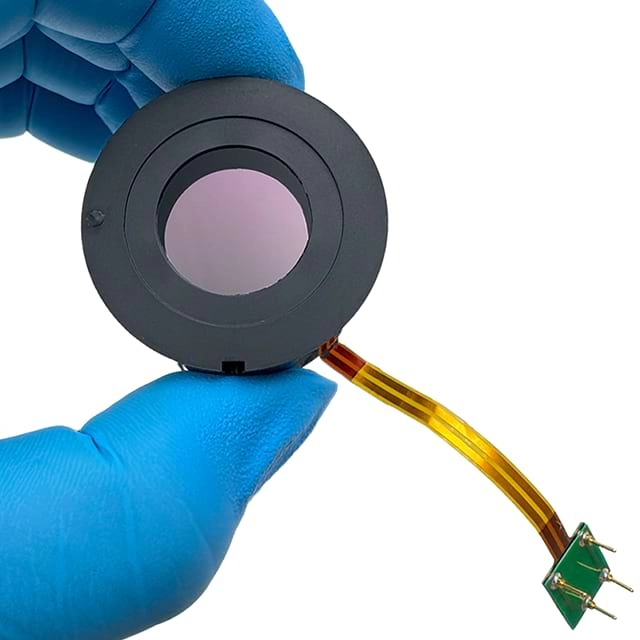
The FOM calculation appears straightforward: multiply Resolution (lp/mm) by Signal-to-Noise Ratio (SNR). This produces a single, universally recognized number on the spec sheet. However, FOM is merely a limiting resolution metric, not a comprehensive image quality score. An image intensifier tube carrying a massive FOM might still fail an operator in the field. The calculation completely ignores environmental factors, EBI limits, halo size, and spectral sensitivity. Relying solely on this single multiplier creates dangerous procurement blind spots.
Spec-sheet chasing regularly leads to diminishing field returns. Consider a comparative scenario based on actual field testing under dynamic canopy cover. Tube A features 81 lp/mm resolution and 28 SNR, equaling a FOM of 2268. Tube B features 64 lp/mm resolution and 35 SNR, giving a FOM of 2240. An uneducated buyer often chooses Tube A based on the higher number. However, in dynamic, rural lighting, Tube A performs vastly worse. The low SNR causes heavy visual static, obscuring target identification. Tube B delivers a crisp, clear image in extreme darkness because its noise floor is significantly lower. A high-FOM image tube without balanced sub-metrics is a tactical liability.
Different operational environments demand distinct minimum specifications. Over-specifying drains capital resources, while under-specifying directly risks operator safety. Utilize these hard baselines to guide requirements.
FOM 1400-1600: Minimum acceptable standard for basic law enforcement patrol, general commercial observation, and urban environments with high ambient light.
FOM 1800-2000: Standard infantry military issue. Delivers reliable tactical performance across mixed environments and standard night maneuvers.
FOM 2200-2400+: Aviation grade and tier-one special operations thresholds. Required for extreme low-light deployment, subterranean clearance, and specialized recon tasks.
SNR stands as the ultimate arbiter of performance in true zero-light conditions. It measures the ratio of the true image signal against the internal electronic noise generated by the tube. A higher SNR directly reduces scintillation—the visual static or "snow" present in complete darkness. You want an SNR of 30 or higher for serious tactical deployment. This heavy noise reduction directly increases an operator's ability to positively identify non-illuminated targets against complex backgrounds. A high SNR pulls usable imagery out of pure starlight, ensuring visual dominance before a threat acts.
EBI defines the baseline light the tube generates internally when exactly zero photons enter the objective lens. High EBI washes out contrast in extreme dark. This metric becomes critically important for subterranean environments, unlit structures, or deep canopy jungles. Astronomical observation communities test EBI rigorously and confirm that lower is better, but only up to a point. Chasing EBI values below 1.0 is largely imperceptible to the human eye. Target a maximum EBI of 2.0 for general tactical use. For dedicated cave or tunnel clearance, aim for 1.5 or lower to preserve shadow definition.
Factory data sheets always quote dead-center resolution. However, resolution inherently drops off near the outer edges of the intensifier screen. Edge-to-edge clarity matters heavily for peripheral threat detection. Furthermore, the tube itself forms only part of the optical equation. Placing a premium high-resolution component behind cheap, commercial glass lenses ruins the projected image, creating a severe optical bottleneck. Mil-spec lens assemblies, such as Carson Industries or Fujinon glass, are mandatory. They ensure the raw amplification power of the device reaches the operator's eye undistorted.
Halo defines the blooming effect around focused light sources, such as streetlights, vehicle headlights, or IR targeting lasers. Large halos obscure targets standing near or behind these light sources. Acceptable military thresholds sit strictly under 0.85mm for Gen 3 units. Unfilmed hardware often achieves even smaller halos, sometimes reaching 0.7mm or below. Controlled halos prevent complete target obscuration during chaotic engagements. Luminous gain dictates how bright the final image appears. Manual gain systems allow operators to manually adapt device brightness, heavily reducing eye strain when moving between dark fields and lit structures.
The debate between white and green phosphor involves serious cognitive processing analysis. You must dispel common marketing myths immediately: White Phosphor does not inherently gather more light than Green Phosphor. However, the human eye utilizes both rod and cone receptors to process white light. Green light primarily engages only the rods. Because White Phosphor utilizes the eye more efficiently, it vastly reduces operator eye fatigue during long deployments. It drastically improves depth perception and spatial contrast recognition. Target outlines appear sharper and more defined against dark backgrounds. This ergonomic advantage translates directly to sustained field lethality and reduced operator exhaustion.
Modern tactical environments feature highly dynamic, unpredictable lighting conditions. Sudden indoor illumination, breaching charges, muzzle flashes, and flashbangs easily overload a sensor. An autogated power supply integrated into a night vision intensifier is absolutely necessary. It rapidly cycles power to the photocathode on and off in fractions of a millisecond. Autogating handles dynamic lighting spikes without permanently damaging the MCP and prevents the operator from being instantly blinded. Bright-Source Protection (BSP) acts as a secondary failsafe mechanism. It physically drops the operating voltage if the device detects sustained high-level light exposure, keeping the hardware running safely through urban engagements.
You must evaluate genuine manufacturer data sheets with intense scrutiny. Do not accept summarized vendor specs; demand the actual factory sheet tied to the serial number. The intensifier screen is mapped into three distinct zones to classify blemishes and dark spots.
Zone | Screen Area | Mil-Spec Blemish Tolerance |
|---|---|---|
Zone 1 | Dead center of the image | Zero tolerance for spots > .003 inches. Strict rejection. |
Zone 2 | Concentric ring around center | Minor spots acceptable, highly regulated count and size. |
Zone 3 | Outer periphery of the screen | Multiple spots acceptable, minimal impact on operation. |
Hard mil-spec standards dictate strict rejection criteria. A blemish larger than .003 inches in Zone 1 is an instant disqualification for a military contract. However, minor microscopic spots in Zone 3 are perfectly acceptable. They sit entirely in the operator's peripheral vision and do not impede operational readiness. Understanding these tolerances saves significant procurement capital by preventing unnecessary rejections.
Differentiating testing and grading standards is a core skill. "Commercial Spec" tubes possess identical internal components to mil-spec units. They simply failed rigid spot-tolerance, halo measurement, or minor aesthetic tests at the factory. A commercial tube might have a slightly larger spot in Zone 2, yet its SNR and resolution remain identical to an aviation-grade unit. This represents a highly viable, efficient avenue for domestic law enforcement and commercial agencies. You achieve tier-one capability without paying the premium associated with flawless Zone 1 screen mapping.
The military optics market relies heavily on global defense deployments. Consolidation among major manufacturers heavily dictates long lead times for specialized components. Procurement officers cannot just look at raw specifications. You must evaluate supplier stability, production run capacity, and long-term warranty support. A brilliant device is useless if the manufacturer cannot replace it during an active conflict. Maintain open communication lines with technical sales teams and secure delivery schedules before committing procurement capital.
The internal component is only as good as its external housing. You must evaluate housing purge requirements thoroughly. Nitrogen purging prevents internal fogging during rapid temperature shifts, such as exiting a climate-controlled helicopter into a humid jungle. Waterproof ratings are equally critical; a standard rating of 66 feet for 2 hours ensures robust maritime operational capability. Internal electrical contacts also matter heavily. Pogo pins offer superior, robust connections compared to standard wired connections, which can break under shock. Proper integration ensures the unit survives drop tests, weapon recoil forces, and full water immersion.
Securing advanced technology outside the US involves rigid regulatory hurdles. A Gen3 FOM2200 tube utilizing unfilmed technology falls strictly under ITAR jurisdiction. Export Administration Regulations (EAR) also apply to various lower-tier tech levels. You must verify end-user compliance early in the procurement cycle, including DSP-83 non-transfer certificates. Additionally, dispel outdated myths regarding operational lifespan. Modern Gen 3 and 4G units boast an incredible longevity. The Mean Time Between Failures (MTBF) regularly ranges from 10,000 to 15,000+ hours. Lifespan degradation is effectively a non-issue for practical, real-world field deployment.
Evaluating military-grade optics requires disciplined analysis and a firm understanding of field realities. You must prioritize SNR, EBI, and spectral band over isolated resolution metrics. A balanced, cleanly zoned spec sheet always outperforms a lopsided sheet in adverse field conditions. Operational theater realities dictate the required hardware limits. Avoid spec-sheet chasing and focus entirely on metrics that solve dark-environment challenges.
Follow these exact steps to streamline your procurement process:
Verify export compliance frameworks (ITAR/EAR) and secure firm supply chain lead times before selecting a specific model.
Establish a minimum SNR baseline of 30+ and a maximum EBI threshold below 2.0 to ensure true zero-light performance.
Select White Phosphor (P45) screens to reduce operator eye fatigue during extended, multi-hour mission profiles.
Filter acceptable zone blemishes based on strict budget constraints, utilizing Commercial-Spec fallouts where applicable.
Contact technical sales teams immediately to request customized data sheets and detailed housing integration quotes.
A: The minimum standard for reliable infantry military issue sits between 1800 and 2000 FOM. Tier-one special operations and aviation applications typically demand a FOM of 2200 or higher. However, FOM must always be paired with a high SNR to guarantee actual field performance.
A: Graininess, known as scintillation, occurs when the Signal-to-Noise Ratio (SNR) is too low. A unit can achieve a high FOM entirely through massive resolution numbers. If the SNR remains low, the device cannot process the lack of photons efficiently, causing visual static.
A: Gen 3 devices use gallium arsenide photocathodes optimized heavily for near-infrared light, excelling in deep dark rural areas. 4G devices utilize a wider spectral band offering Out-of-Band (OOB) sensitivity. This makes 4G superior for detecting high-frequency lasers and operating in dynamic urban lighting.
A: Equivalent Background Illumination (EBI) is the baseline glow generated internally with zero light input. In completely dark subterranean caves, high EBI washes out image contrast. Lower EBI preserves shadow definition, allowing operators to distinguish targets against dark backgrounds.
A: OOB sensitivity refers to the ability to detect light wavelengths outside the standard near-infrared spectrum. It allows operators to see specific target designators and lasers, such as 1064nm wavelengths, that remain completely invisible to traditional night vision systems.
A: Historically, yes, but not anymore. Early unfilmed units suffered from ion-strike degradation and recoil fragility. Modern manufacturing techniques and advanced materials have entirely mitigated these issues. Current unfilmed models withstand standard military weapon recoil forces just as effectively as thin-filmed units.
A: Zone 1 is the exact center of the intensifier's viewing area. Military specifications demand pristine clarity where the operator focuses most. Any dark spot or blemish larger than .003 inches in Zone 1 triggers an automatic rejection for strict military contracts.


