
Language
Views: 0 Author: Site Editor Publish Time: 2026-02-25 Origin: Site


At the core of any night vision device is its engine: the Image Intensifier Tube (IIT). This single component is the primary determinant of the device's performance, longevity, and ultimately, its cost. Understanding the differences between tube generations is crucial for making an informed investment. For years, the choice was simple, but today, the performance gap between high-end Generation 2+ (Gen 2+) and standard Generation 3 (Gen 3) is narrowing in some areas while remaining vast in others, creating a complex decision for users. This guide offers a clear technical and operational breakdown to help professionals, hunters, and enthusiasts select the right tube. We will evaluate them based on light environment, mission profile, and total cost of ownership to help you make the best choice for your specific needs.
Material Science: The shift from Multi-Alkali (Gen 2) to Gallium Arsenide (Gen 3) is the fundamental driver of sensitivity.
Operational Lifespan: Gen 3 tubes typically offer double the service life (10,000+ hours) compared to Gen 2 (5,000 hours).
Environment Matters: Gen 2+ excels in urban "high-light" environments, while Gen 3 is mandatory for "zero-light" environments like deep woods or caves.
The "Gen 2+" Nuance: High-end European tubes (e.g., Photonis) can outperform entry-level Gen 3 in specific metrics like EBI and signal-to-noise ratio (SNR).
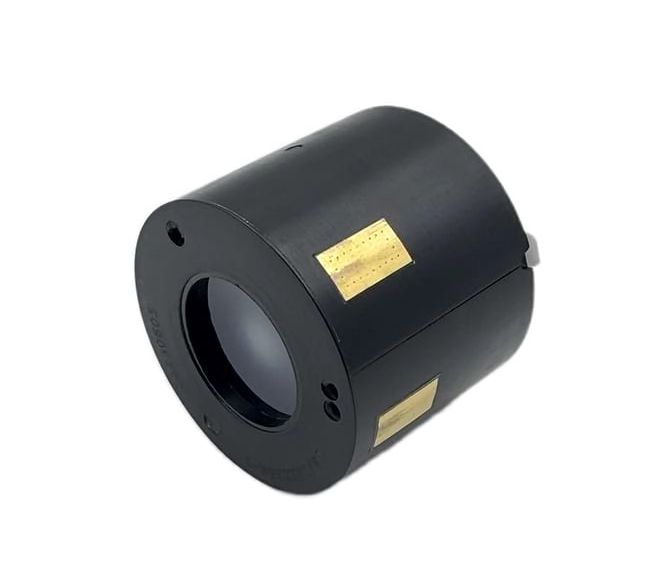
The generational leap from Gen 2 to Gen 3 isn't just a marketing term; it represents a fundamental change in the material science at the heart of the Image Intensifier Tube. This change begins at the photocathode, the component responsible for the initial conversion of light (photons) into energy (electrons).
Generation 2 tubes utilize a Multi-Alkali photocathode, often designated S-25. This compound is highly effective at capturing photons across the visible light spectrum and into the near-infrared range. When a photon strikes the S-25 surface, it excites the material and releases an electron. This process is the first step in light amplification. While robust and efficient, the multi-alkali formula has inherent limits on its photosensitivity, which is its ability to convert light into an electronic signal, especially in extremely low-light conditions.
The defining innovation of a Gen3 Night Vision Image Intensifier Tube is the switch to a Gallium Arsenide (GaAs) photocathode. GaAs is a semiconductor with exceptional light absorption properties, particularly in the 800-900 nanometer (nm) range of the near-infrared spectrum. This is a critical advantage because ambient night light from the moon and stars is richest in this part of the spectrum. The result is a dramatic increase in photosensitivity, allowing Gen 3 tubes to produce a brighter, clearer image with less available light and effectively extending detection ranges beyond 300 yards in starlight conditions.
Both generations use a Microchannel Plate (MCP) to amplify the initial electron signal. The MCP is a wafer-thin glass disc containing millions of microscopic channels. As electrons pass through these channels, they strike the walls, releasing thousands more electrons in a cascade effect.
However, the high-energy process inside a Gen 3 tube creates a risk. Positive ions generated during amplification can travel backward and strike the delicate GaAs photocathode, causing rapid degradation. To prevent this, Gen 3 tubes incorporate an ion barrier film on the MCP. This film acts as a shield, dramatically increasing the tube's operational lifespan to over 10,000 hours.
The Trade-Off: This protective film isn't without a minor drawback. It can slightly diffuse the electron cloud as it passes through, which may contribute to a larger "halo" effect around bright light sources compared to filmless or thin-filmed Gen 3 variants. Managing this trade-off between longevity and halo size is a key focus of modern tube development.
It's important to clarify that "Gen 2+" is a commercial designation, not an official U.S. Military Specification (MIL-SPEC). The term refers to a high-performance Gen2+ Image Intensifier Tube that pushes the limits of multi-alkali technology. Manufacturers, have achieved significant improvements in resolution, signal-to-noise ratio, and overall image quality, placing these tubes in a performance category well above standard Gen 2 devices and making them competitive with some entry-level Gen 3 units.
While the internal architecture defines the potential of Night Vision Tubes, their real-world performance is measured by a set of key benchmarks. These metrics, found on a tube's data sheet, provide an objective way to compare different generations and individual units.
| Performance Metric | Typical Gen 2+ Range | Typical Gen 3 Range | What It Means for the User |
|---|---|---|---|
| Luminous Gain | ~20,000x | 30,000x - 50,000x+ | Gen 3 produces a significantly brighter image in very dark conditions. |
| Resolution (lp/mm) | 45 - 64 lp/mm | 64 - 72+ lp/mm | Gen 3 offers a sharper, more detailed image, allowing for better target identification. |
| Signal-to-Noise Ratio (SNR) | 18 - 28 | 25 - 35+ | Higher SNR in Gen 3 reduces "scintillation" or static, revealing more detail in shadows. |
| Photosensitivity (µA/lm) | 500 - 1000 µA/lm | 1800 - 2400+ µA/lm | Gen 3 is far more efficient at converting faint light into a usable signal. |
Luminous gain measures the degree to which the IIT amplifies light. While a Gen 2 tube might amplify ambient light around 20,000 times, a modern Gen 3 tube can achieve amplification factors between 30,000 and 50,000. In practical terms, this means that under a moonless, overcast sky, a Gen 3 device will present a visibly brighter and more usable image where a Gen 2 device might struggle.
Resolution, measured in line pairs per millimeter (lp/mm), defines the tube's ability to render fine detail. Higher numbers mean a sharper, crisper image. Standard Gen 2 tubes typically fall in the 45-64 lp/mm range, while Gen 3 tubes consistently deliver 64-72 lp/mm or more. This difference becomes apparent when trying to identify a target or read text at a distance; the Gen 3 image will simply be clearer.
Many experts consider SNR the single most important metric for evaluating low-light performance. It measures the ratio of the useful image signal to the background "noise" or static, often seen as a sparkling effect called scintillation. A tube with a high SNR will produce a clean, stable image that reveals subtle details in dark shadows. A low SNR tube will have a "grainy" or "crawling" image where those same details are lost in the noise. While high-end Gen 2+ can have excellent SNR, top-tier Gen 3 tubes consistently lead in this critical area.
As mentioned, the Gallium Arsenide photocathode in Gen 3 tubes is exceptionally sensitive to near-infrared (NIR) light. This is a critical advantage because the natural night sky illumination ("skyglow") is rich in NIR energy. This allows Gen 3 tubes to "see" more of the available light, making them vastly superior in conditions with no visible moon, such as under a dense forest canopy or on a heavily overcast night. Gen 2 tubes, with their multi-alkali photocathodes, are less sensitive in this spectral range and may require an external IR illuminator to perform in the same conditions.
Beyond the core performance metrics, modern image intensifier tubes incorporate advanced features that enhance usability, protect the equipment, and reduce operator fatigue. These features are often available in both high-end Gen 2+ and Gen 3 models.
Autogating is a crucial technology for anyone operating in dynamic lighting environments, such as urban areas or when moving in and out of buildings. It works by rapidly switching the tube's power supply on and off thousands of times per second. This process accomplishes two things:
Tube Protection: When exposed to a sudden bright light source like a headlight or muzzle flash, an ungated tube can "bloom" (creating a large, washed-out halo) or even suffer permanent burn damage. Autogating minimizes this effect, preserving the image and protecting the tube.
Image Clarity: By regulating the amount of light entering the tube, AG maintains a clearer image in high-light areas and prevents the user from being temporarily blinded, allowing for faster recovery and better situational awareness.
For professional use, autogating is considered a non-negotiable feature.
Traditionally, night vision images are displayed in a monochromatic green (P43 phosphor). While effective, prolonged use of green phosphor can cause eye strain for some users. The modern trend is a shift toward white phosphor (P45), which produces a grayscale, black-and-white image. Users often report several benefits:
Reduced Eye Fatigue: Many find the black-and-white image more natural and less strenuous to view over long periods.
Improved Contrast: The grayscale image can make it easier to perceive depth and distinguish between different textures and shapes.
White phosphor is now a premium option available for both high-end Gen 2+ and all tiers of Gen 3 tubes.
Automatic Brightness Control is a foundational feature in modern tubes. It functions by automatically adjusting the voltage to the microchannel plate to maintain a relatively consistent image brightness as ambient light levels change. This prevents the image from becoming overly bright when moving into a more illuminated area, which protects the user's natural night-adapted vision and prevents the tube from being overwhelmed.
EBI is a measure of the tube's inherent "glow" in absolute darkness. It's the amount of light a tube seems to produce even when no photons are entering it. A lower EBI value is always better, as it indicates a darker background, which allows the user to see fainter objects. While a high EBI might not be noticeable in a suburban backyard, it becomes critically important for specialized applications like astronomy or long-range surveillance, where detecting the faintest possible targets is the primary goal.
Choosing between Gen 2+ and Gen 3 is not just a performance decision; it's also a financial one. Evaluating the total cost of ownership (TCO) requires looking beyond the initial purchase price to consider operational lifespan, durability, and long-term value.
This is one of the most significant differentiators between the two generations. The ion barrier film introduced in Gen 3 technology serves to protect the photocathode from ion bombardment, which is the primary cause of tube degradation over time.
Gen 2 / Gen 2+: These tubes typically have an expected service life of around 5,000 hours. This is more than sufficient for many civilian applications, such as occasional hunting trips or recreational night hiking.
Gen 3: These tubes are built for professional use and are rated for 10,000 hours or more. For law enforcement, military, or security professionals who use their equipment nightly, this extended lifespan makes Gen 3 a more cost-effective investment over time.
Durability is another key consideration, especially for devices mounted on firearms. Historically, Gen 2 tubes were known for being quite robust and able to withstand significant recoil. Early Gen 3 tubes, particularly the more advanced "filmless" varieties, were perceived as more delicate due to the removal or thinning of the protective ion barrier. However, modern manufacturing techniques have greatly improved the shock resistance of high-end Gen 3 tubes, making them suitable for most weapon-mounted applications. Nonetheless, for extremely high-recoil platforms, some users still prefer the proven resilience of certain Gen 2+ models.
Calculating the true cost requires a simple formula: divide the initial price by the expected service life to get a cost-per-hour.
Initial Purchase Price: Gen 2+ devices are generally less expensive upfront than their Gen 3 counterparts.
Cost-per-Hour: Despite the higher initial cost, a Gen 3 tube with double the lifespan can often result in a lower cost-per-hour of operation, making it a smarter long-term investment for heavy users.
Resale Value: The market for used night vision is strong, but Gen 3 units consistently hold their value better than Gen 2 units. The "Gen 3" designation is a powerful selling point, and these devices are always in demand, ensuring a better return if you decide to upgrade in the future.
The best choice of image intensifier tube ultimately depends on your specific mission and environment. There is no single "best" tube for everyone. The right decision involves honestly assessing your needs and budget.
For military, law enforcement, and serious security personnel, a Gen 3 autogated tube is the non-negotiable standard. In "no-fail" situations, the superior low-light performance is paramount. The ability to operate passively (without an active IR illuminator) is a critical tactical advantage, as IR light is visible to any adversary with their own night vision. The autogating feature is essential for surviving the rapid light changes of a dynamic engagement.
This is where the debate becomes more nuanced. For a hog or coyote hunter who is permitted to use an IR illuminator, a high-quality Gen 2+ tube can be an excellent and cost-effective choice. The IR illuminator will provide more than enough light for the tube to produce a clear, bright image for identification and targeting. However, if you hunt in areas where IR is restricted or prefer not to use it to avoid spooking game, investing in a Gen 3 unit will provide a significant advantage, especially under tree cover or on moonless nights.
In urban or suburban environments with significant ambient light pollution, a high-end Gen 2+ tube (like a Photonis Echo) is often a preferred choice. These tubes are known for their excellent "high-light" resolution and superior management of blooming and halo around streetlights and other point light sources. In these conditions, the extreme sensitivity of a Gen 3 tube may not provide a significant advantage and can sometimes be hampered by the halo effect from its ion barrier film.
For serious astronomy, the choice is clear: Gen 3 Gallium Arsenide (GaAs) or Gallium Arsenide Phosphide (GaAsP) tubes are required. The reason is spectral response. These tubes are exceptionally sensitive to the H-alpha wavelength (656 nm), which is the light emitted by many nebulae and deep-sky objects. A Gen 3 tube paired with an H-alpha filter can reveal celestial structures that are completely invisible to the naked eye or even a Gen 2 device.
The choice between Gen 2+ and Gen 3 boils down to a clear division of purpose. A high-performance Gen 2+ tube is a powerful and budget-conscious tool, excelling in mixed-light environments where its clarity and halo control shine. It represents the peak of multi-alkali technology. Generation 3, however, remains the undisputed champion of low-light engineering, offering unparalleled sensitivity thanks to its Gallium Arsenide architecture.
Your final decision should be guided by a simple principle: buy for the darkest environment you expect to operate in. If you will be under a thick forest canopy on an overcast night and cannot use an infrared illuminator, Gen 3 is the only reliable option. For all other scenarios, a premium Gen 2+ tube offers compelling performance for the price. The most critical next step is to move beyond simple "Generation" labels and start comparing the individual specification sheets. Pay close attention to the Signal-to-Noise Ratio (SNR), Resolution (lp/mm), and EBI to find the perfect tube for your mission.
A: Not necessarily in every metric. A premium Gen 2+ tube from a manufacturer like Photonis can have a better Signal-to-Noise Ratio (SNR) or halo performance than a lower-spec, entry-level Gen 3 tube. However, no Gen 2+ tube can match the raw photosensitivity (low-light performance) of a good Gen 3 tube due to the material difference in their photocathodes (Multi-Alkali vs. Gallium Arsenide).
A: Yes, you can, and it will show you significantly more than the naked eye. However, Gen 3 tubes are vastly superior for astronomy. Their Gallium Arsenide photocathodes have a much higher spectral response in the near-infrared, particularly around the Hydrogen-alpha wavelength. This makes them exceptionally good at observing faint nebulae and other deep-sky objects that Gen 2 tubes struggle to detect.
A: Gen 3 night vision technology is restricted under the International Traffic in Arms Regulations (ITAR) because it is considered a significant military technology. The superior low-light performance provided by the Gallium Arsenide (GaAs) photocathode offers a distinct tactical advantage. The U.S. government tightly controls its export to prevent it from falling into the hands of potential adversaries.
A: FOM, or Figure of Merit, is a calculated value (Resolution x SNR) used as a quick reference for a tube's performance. While a higher FOM is generally better, it doesn't tell the whole story. A tube could have an extremely high resolution but a mediocre SNR, resulting in a high FOM but a noisy image in low light. It is often better to have a tube with balanced, high stats for both resolution and SNR rather than one that is skewed.
A: Both are advanced Gen 3 types. "Thin-Filmed" tubes (common from Elbit) have a significantly thinner ion barrier film than standard Gen 3 tubes, improving light transmission and reducing halo. "Filmless" tubes (a technology pioneered by L3Harris) remove the ion barrier film entirely. This provides the highest performance in terms of image clarity and low-light gain but requires a gated power supply to protect the more exposed photocathode, slightly reducing its theoretical lifespan compared to filmed tubes.


