
Language
Views: 0 Author: Site Editor Publish Time: 2026-05-13 Origin: Site


Quad-tube Night Vision Goggles carry an undeniable halo effect within tactical and aviation communities. You often see them featured in high-stakes military operations or elite law enforcement raids. They look incredibly futuristic and offer unmatched situational awareness in pitch-black environments. However, this peak performance comes at an extreme financial entry point. A single panoramic setup can easily cost between $30,000 and $40,000. This represents a massive leap compared to standard dual-tube or single-tube night vision systems.
Are they truly worth such a staggering investment? While panoramic vision expands your field of view drastically, justifying this cost requires strict evaluation. You must analyze your actual operational needs. You also need to consider your physical weight tolerance and realistic budget constraints. In this article, we will break down the advantages of 97-degree panoramic vision. We will also compare various configurations and highlight the physical and financial trade-offs you face when running quad-tubes.
Quad-tubes expand the standard field of view (FOV) from 40° to 97°, significantly reducing head-panning and blind spots.
The performance leap comes with severe ergonomic trade-offs, notably neck strain and mandatory external power routing.
For most civilian, law enforcement, and recreational applications, high-spec binocular or premium monocular systems deliver a higher return on investment.
Acquisition costs only represent the baseline; buyers must factor in specialized helmets, mounts, and counterweights.
To understand the appeal of panoramic systems, we must first address the core limitation of standard night vision. Traditional binos and monos restrict your vision heavily. Operators often describe the experience as "looking through a toilet paper tube."
Human eyes naturally process a horizontal field of view of about 200 degrees. Standard optical devices limit this natural peripheral awareness down to a mere 40 degrees. This drastic reduction creates dangerous blind spots in your periphery. You lose spatial awareness. To compensate, operators must constantly scan their heads left and right. This continuous movement causes fatigue. It also slows down reaction times during critical moments.
Quad-tube systems solve this problem using clever optical engineering. The housing holds four overlapping image intensifier tubes instead of two. The two center tubes point straight ahead. They provide a standard 40-degree binocular overlap for crucial depth perception. The two outer tubes angle outward slightly. They capture the peripheral environment. The lenses merge these separate images into one continuous 97-degree horizontal field of view. You gain back your peripheral vision instantly.
Peripheral detection proves mission-critical in specific high-stress environments. Here is where the 97-degree advantage truly shines:
Dynamic Close-Quarters Navigation: Moving through narrow hallways requires rapid threat assessment. Panoramic vision lets you clear corners faster without constantly swinging your head.
Aviation Applications: Helicopter pilots rely heavily on peripheral cues to judge altitude and airspeed. Quad-tubes allow them to monitor cockpit instruments while simultaneously watching the horizon.
Driving in Blackout Conditions: Operating a vehicle under infrared light is extremely difficult. A wider field of view helps drivers track road edges and spot obstacles earlier.
You cannot discuss panoramic optics without addressing the immense price tag. Understanding where your money goes helps frame the investment.
Why do these units carry such a premium? First, the physical housing is highly complex. Manufacturing a durable, lightweight bridge to hold four tubes requires expensive aerospace-grade materials. Second, the manufacturer must source four perfectly matched image intensifier tubes. Every tube has unique performance metrics. These include FOM (Figure of Merit) and SNR (Signal-to-Noise Ratio). Finding four tubes matching in brightness, screen tint, and resolution is incredibly difficult. Manufacturers reject many tubes during this matching process. This extensive quality control drives up the final retail price.
You must weigh the performance gain against the financial leap. High-end articulating dual-tube systems cost around $10,000. A quad-tube system costs roughly $40,000. You gain a 140% increase in field of view. However, you pay a 300% increase in price. For most users, this math simply does not make sense. The premium applies only to a very narrow margin of professional necessity.
The sticker price of the optic only represents your baseline expense. Integrating a heavy panoramic device requires substantial secondary gear. You cannot run these on a cheap bump helmet. You need specific upgrades.
Reinforced Ballistic Helmets: A standard helmet will flex under the weight. You need a premium, rigid shell.
Specialized Dovetail Mounts: You must purchase heavy-duty CNC-machined mounts. These prevent the heavy optic from breaking off during vigorous movement.
Proprietary Battery Packs: Four tubes drain power rapidly. You must buy specialized remote battery packs and heavy-duty routing cables.
Every night vision configuration serves a distinct purpose. No single device works perfectly for every scenario. Below, we break down the operational realities of the three main categories.
These devices offer apex-level situational awareness. They excel in open environments and vehicular operations. However, they are the worst option for physical weight and general cost. Furthermore, their wide physical profile creates massive snag hazards. They easily catch on doorframes, branches, or vehicle interiors during close-quarters movement.
Dual-tube systems remain the gold standard for most professionals. They provide essential depth perception for navigating uneven terrain. They allow for active movement and confident driving. Binoculars offer the best possible balance of capability, weight, and financial cost. They satisfy the rigorous demands of 90% of serious end-users.
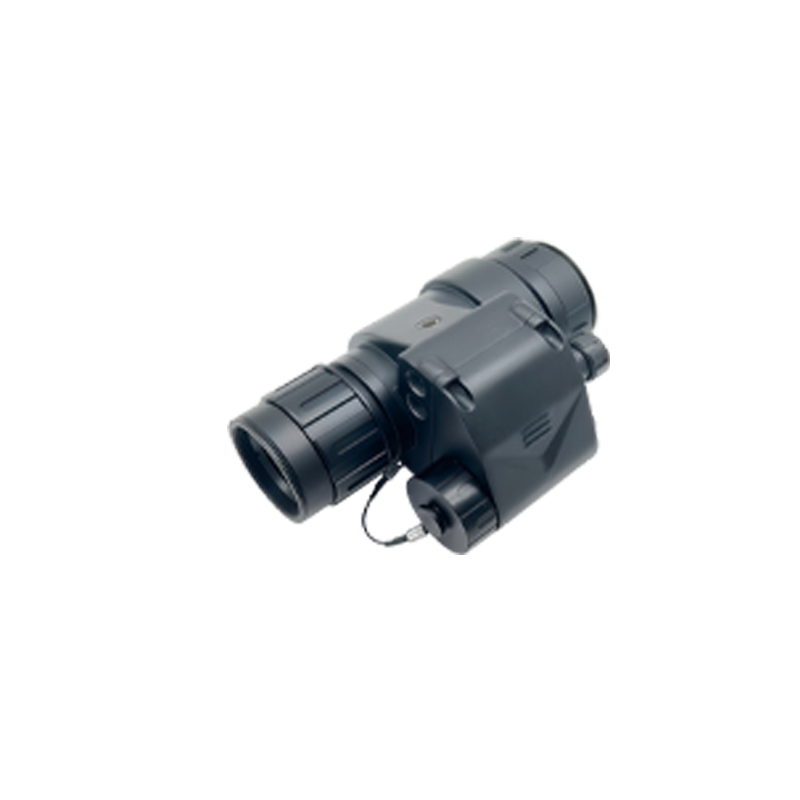
Do not underestimate the operational viability of single-tube systems. Monoculars keep one eye unaided. This allows your natural vision to adapt to ambient lighting conditions while your aided eye processes infrared data. They remain highly versatile. For instance, the 40° FOV Monocular Night Vision Goggle QVS14 serves as an excellent benchmark for a scalable, lightweight entry point. It allows natural eye-adaptation to ambient light while providing essential IR capabilities. You can easily mount it, stow it, or hand-hold it as needed.
Use this simple table to contrast the primary characteristics of each setup.
Feature | Quad-Tubes | Binoculars | Monoculars |
|---|---|---|---|
Field of View | 97 Degrees | 40 to 50 Degrees | 40 Degrees |
Depth Perception | Excellent | Excellent | Poor |
System Weight | Very Heavy (30+ oz) | Moderate (18-24 oz) | Lightweight (9-12 oz) |
Estimated Cost | $30,000 - $40,000+ | $5,000 - $12,000 | $2,500 - $4,500 |
Best Use Case | Aviation, Driving | General Tactical, Hunting | Observation, Budget Use |
Owning panoramic night vision involves continuous physical and logistical management. The device dictates how you set up your entire kit.
We cannot overstate the physics of a front-heavy helmet. Hanging over 30 ounces of glass and metal off your forehead alters your center of gravity. Neck fatigue is entirely inevitable during extended operations. To prevent long-term cervical spine injury, you must deploy counterweight systems. You strap heavy lead weights to the back of your helmet. This balances the fulcrum point. However, this strategy increases the overall gross weight on your neck.
Four intensifier tubes consume battery life aggressively. Onboard batteries die quickly. Therefore, you must rely on remote battery packs. These packs sit on the rear of your helmet. You connect them to the optic using exterior cables. This setup introduces immediate snag risks. In dense woodland environments or tight corridors, rogue cables can catch on obstacles. If a branch rips your power cable out, you lose vision instantly.
An exposed, wider housing unit is inherently more fragile. It bumps into walls and door frames constantly. Maintenance is also highly complex. If you damage one single tube in a binocular, repair is straightforward. If one tube fails in a quad system, you face a major issue. Re-collimation is complex. The technician must perfectly realign four separate optical channels to prevent double vision. This repair process is slow and exceptionally expensive.
Best Practice: Always route power cables under your helmet cover. Secure them with retention bands to eliminate snag hazards.
Best Practice: Use specialized neck strengthening exercises if you plan to run quads regularly.
Common Mistake: Buying a cheap helmet mount. A weak mount will eventually snap under the weight of a panoramic unit, destroying a $40,000 investment.
Making a final decision requires brutal honesty about your capabilities, environment, and budget. Use the shortlisting logic below to find your optimal path.
Buy Quads if: You possess an entirely unrestricted budget. You focus heavily on aviation or vehicular operations. Your institutional mandate requires maximum possible situational awareness.
Buy Binos if: You conduct general tactical training. You hunt at night. You regularly navigate uneven terrain on foot. You want the highest return on investment for serious use.
Buy Monos if: You are budget-conscious. You want a lightweight setup. You need scalable passive aiming capabilities. You prefer retaining one naturally adapted eye in mixed lighting environments.
Do not buy a housing configuration blindly. The glass and internal tubes matter far more than the external shell. Before committing capital, consult reputable Night Vision Device Buying Guides. You must thoroughly understand tube specifications. Learn the difference between Gen 2+ and Gen 3 unfilmed technology. Research how Signal-to-Noise Ratio (SNR) impacts low-light clarity. Decide whether you prefer White Phosphor or Green Phosphor screens. Educating yourself on these metrics ensures you buy a system tailored exactly to your environment.
Quad-tube panoramic setups are incredible feats of optical engineering. They eliminate the tunnel-vision effect and provide unmatched peripheral awareness. However, they remain a hyper-specialized tool. They are not a universal upgrade for every user. The staggering financial cost, paired with severe ergonomic weight penalties, makes them impractical for average applications.
For most enthusiasts, law enforcement officers, and hunters, dual-tube or high-quality single-tube systems make far more sense. They save you thousands of dollars while saving your neck from extreme fatigue. Remember, gear does not replace skill. A highly proficient operator using a premium monocular will consistently outperform an untrained user struggling under a heavy, poorly utilized quad-tube setup. Assess your mission strictly, budget wisely, and train relentlessly.
A: Yes, they are generally legal for civilians to own in the United States. However, high-spec night vision technology falls under strict ITAR (International Traffic in Arms Regulations). You can legally purchase and use domestically produced units. You simply cannot export them or allow non-U.S. citizens to access them without State Department authorization.
A: A standard panoramic system weighs approximately 30 to 34 ounces (850–960 grams). By contrast, modern articulating binoculars weigh between 16 and 22 ounces (450–620 grams). When you add mandatory counterweights and remote battery packs for quads, the total helmet weight increases significantly.
A: You can absolutely drive with standard 40° binoculars. Many professionals do it regularly. It simply requires disciplined, continuous head-scanning to check your periphery. Quads are not strictly required, but their 97° field of view makes driving much safer and reduces driver fatigue significantly.
A: Maintaining them requires aligning four independent optical channels. This process is called collimation. If one tube breaks, replacing it requires finding another tube with perfectly matching specifications (FOM, SNR, halo). You then pay a specialized technician for complex re-collimation labor to prevent the user from experiencing double vision.


