
Language
Views: 0 Author: Site Editor Publish Time: 2026-03-04 Origin: Site


When you're navigating the complex world of night vision, one acronym appears more than any other: FOM, or Figure of Merit. It's the industry's go-to number for benchmarking the performance of an Image Intensifier Tube (IIT), the core component that makes night vision possible. This single value plays a dual role, serving as both a primary performance indicator and a key factor in international export regulations like ITAR. However, relying solely on this number can lead you into the "Spec Sheet Trap," where a high FOM on paper doesn't translate to superior image quality in the field. This guide provides a comprehensive framework to help you evaluate performance by understanding what FOM truly represents—and, more importantly, what it leaves out.
The Formula: FOM is calculated by multiplying Signal-to-Noise Ratio (SNR) by Resolution (lp/mm).
SNR is King: While FOM is a combined score, SNR is the most critical factor for low-light clarity and reducing "scintillation" (visual noise).
Diminishing Returns: Human eyes struggle to perceive resolution increases beyond 64–72 lp/mm; high FOM driven by resolution alone offers little tactical advantage.
The "Hidden" Specs: EBI (Equivalent Background Illumination) and Halo are just as vital as FOM for specific environments like extreme darkness or urban light pollution.
Figure of Merit isn't an arbitrary number; it's a calculated value derived from two fundamental characteristics of an image intensifier tube. Understanding this calculation is the first step toward making an informed purchase.
The formula for FOM provides a standardized method for quantifying the overall potential of a tube:
Signal-to-Noise Ratio (SNR) × Resolution (in line pairs per millimeter, or lp/mm) = Figure of Merit (FOM)
For example, a tube with an SNR of 30 and a resolution of 72 lp/mm would have a FOM of 2160 (30 x 72). This formula distills complex physics into a single, comparable figure used as an industry benchmark.
SNR is arguably the most critical component of the FOM equation. It measures the tube's ability to amplify faint ambient light relative to the electronic noise it generates internally. In night vision, a high SNR means the image is clean and crisp. A low SNR results in a "snowy" or "grainy" image, known as scintillation, which can obscure details and make target identification difficult.
Resolution defines the sharpness and detail of the image. A higher lp/mm value means the tube can render finer details, making it easier to distinguish between similar objects at a distance. For instance, a tube with 72 lp/mm will produce a sharper image than one with 57 lp/mm, all other factors being equal.
FOM provides a useful ladder for categorizing night vision performance. Understanding these tiers helps you align your budget with the right level of technology.
| Performance Tier | FOM Range | Typical Technology | Primary Use Case | Key Characteristics |
|---|---|---|---|---|
| Entry-Level / Commercial | 1400–1600 | Gen 2+ / Older Gen 3 | Hunting, General Navigation | Good with IR illumination; visible noise in very low light. |
| Professional / Mil-Spec | 1800–2000 | Modern Gen 3 | Law Enforcement, Tactical | Excellent low-light detection; the "sweet spot" for cost vs. performance. |
| Elite / Q5 Series | 2300+ | High-Spec Gen 3 (Unfilmed) | Special Ops, Extreme Low-Light | Exceptional clarity without IR; minimal scintillation. |
At the pinnacle of performance are tubes with a FOM of 2300 or higher. At QCNV, our high-end series is designated as Q5. These units leverage advanced Gen 3 technology (such as high-spec unfilmed tubes) to produce incredibly clean images even under starlight or heavy cloud cover, eliminating the need for supplemental IR.
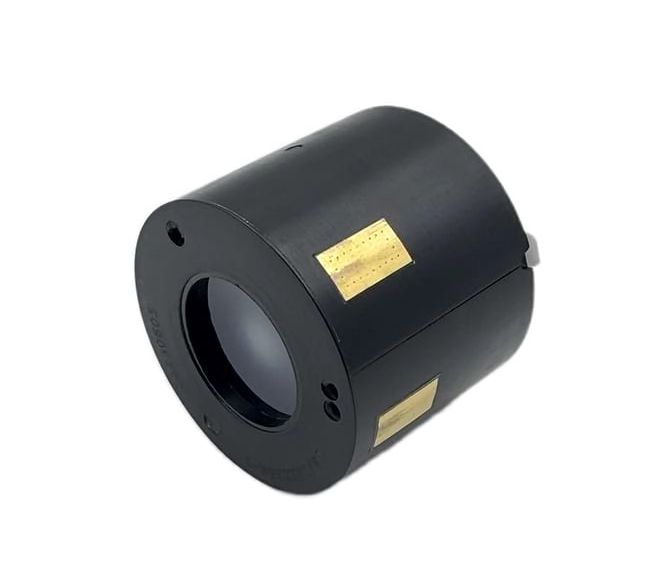
At QCNV, the focus is on integrating the best possible tubes into mission-ready systems. While a high-FOM tube is the engine, the housing and optics determine how that power is harnessed.
A manufacturer can produce a "Paper Tiger"—a tube with an impressively high FOM by maximizing resolution at the expense of SNR. This results in a tube that looks great on a spec sheet but fails in real-world, low-light scenarios.
The Scintillation Problem: If SNR is low, high resolution is useless because the detail is lost in a sea of electronic "snow."
The Resolution Ceiling: Most users struggle to perceive differences beyond 72 lp/mm. Increasing SNR from 25 to 35 provides a much more dramatic improvement in clarity than simply boosting resolution.
The Hierarchy: Professional end-users almost universally prioritize SNR (30+) over resolution.
While FOM is a starting point, other specifications on a data sheet are vital for specific missions:
EBI measures the "glow" the tube generates on its own. A lower EBI is critical for extreme darkness or astronomy to prevent the image from being washed out.
Halo is the ring of light around bright sources (like streetlights). For urban operations, a halo value below 0.8mm is highly desirable to prevent "blooming" from obscuring threats.
This feature protects the tube from sudden bright light and maintains image stability in dynamic lighting conditions—a protective feature FOM does not quantify.
High-performance Gen 3 tubes are heavily regulated. Under U.S. ITAR regulations, tubes exceeding a certain FOM threshold (historically 1600-1800) are restricted from export without specific licenses. Always request the specific Data Sheet for the exact tube you are purchasing to verify tested performance values for that serial number.
FOM is an essential tool, but it is not the whole story. The true meaning of night vision performance lies in a holistic understanding of all specifications. A savvy buyer looks past the single FOM number and prioritizes a balanced data sheet with high SNR, low EBI, and appropriate Halo values tailored to their mission.
A: 1800+ is the professional standard. 2300+ (like the QCNV Q5 Series) is considered elite-tier.
A: No. FOM measures optical performance. Longevity (typically 10,000+ hours) depends on manufacturing quality and materials, not the FOM score.


