
Language
Views: 0 Author: Site Editor Publish Time: 2026-06-19 Origin: Site


While Gen 3 remains the undisputed standard for top-tier military units, modern Gen 2+ tubes have aggressively closed the performance gap. This rapid technological evolution complicates purchasing decisions for law enforcement, private security, and tactical professionals. You face a challenging dilemma when attempting to secure the best optical advantage without misallocating critical operational resources. Selecting the right image intensifier tube requires you to look past aggressive marketing hype. You must carefully evaluate Signal-to-Noise Ratio (SNR), Figure of Merit (FOM), and the specific lighting profile of your operational environment.
This guide provides a clear, evidence-based framework to help you navigate these choices confidently. We empower operators and procurement officers to align exact tube specifications with mission-critical requirements. By evaluating technical baselines and real-world tactical applications, you can effectively match night vision capabilities to your exact deployment needs. Explore the definitive technical differences below to elevate your nighttime operational readiness.
Gen 3 is not strictly mandatory for all operations: Gen 2+ excels in high-ambient-light urban environments (CQB, law enforcement) at a significantly lower cost.
The Gallium Arsenide advantage: Gen 3 tubes utilize a GaAs photocathode, providing unmatched light sensitivity and longevity in true zero-light, rural environments.
FOM isn't the only metric: Housing configurations (binocular vs. monocular) and integration with helmet-mounted systems often impact operational effectiveness as much as tube generation.
Compliance matters: Gen 3 devices are heavily restricted by ITAR, complicating cross-border logistics and private procurement compared to Gen 2+.
Procurement teams often stall on understanding exactly what the performance premium of a Gen3 NVG device actually pays for at the component level. Without clear technical definitions, you risk over-specifying equipment for urban roles or under-equipping personnel for deep rural missions. Let us break down the physical architecture of these two dominant technologies.
Modern Gen 2+ tubes utilize a multi-alkali photocathode to convert incoming photons into electrons. Engineers have pushed this technology to its absolute physical limits over the last decade. Today, you will often find these tubes offered in high-contrast white phosphor. This configuration greatly reduces eye strain during extended observation periods.
It is crucial to understand "Gen 2+" functions as a broad category rather than a single standard. Top-tier Gen 2+ tubes, such as the Photonis Echo series, can actually outperform lower-end Gen 3 tubes in center resolution and auto-gating speed. They deliver exceptionally crisp images. However, they physically lack the advanced chemical composition required for extreme low-light amplification. When ambient light drops to zero, multi-alkali tubes begin to struggle.
Gen 3 tubes introduce a Gallium Arsenide (GaAs) photocathode. This specific chemical compound provides a massive advantage in photon amplification. GaAs tubes simply absorb and convert more light than multi-alkali counterparts. This yields unmatched light sensitivity across the infrared spectrum.
Additionally, Gen 3 architecture features a microscopic ion barrier film. The photocathode generates positive ions during operation. Without a barrier, these ions would strike and degrade the photocathode over time. The film prevents this degradation, dramatically extending tube life. It also dictates the size of the "halo effect" you experience during tactical night vision goggles deployment around artificial light sources. Thinner barrier films in modern unfilmed or thin-filmed Gen 3 units reduce this halo, allowing clearer sight pictures around streetlamps and vehicle headlights.
Common Mistake: Do not assume all Gen 3 units universally beat top-tier Gen 2+ units in every category. A low-spec Gen 3 tube with poor resolution will underperform a flagship Gen 2+ tube in a moderately lit urban sector.
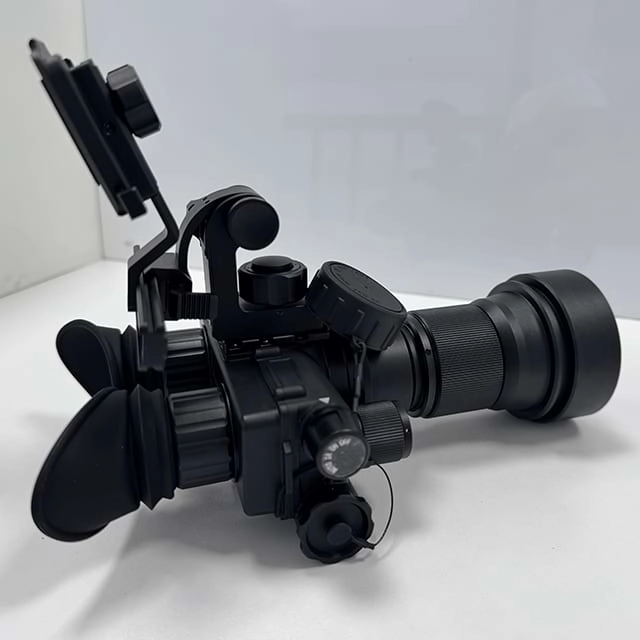
You must map technical specifications directly to specific tactical outcomes. Manufacturers often make exaggerated claims about "turning night into day," but true operational capability depends heavily on ambient conditions. We evaluate performance across distinct environmental profiles.
Urban/Suburban: In environments containing streetlights, structural lighting, and vehicle traffic, Gen 2+ performs exceptionally well. High-end multi-alkali tubes handle high-light transitions efficiently. Their autogating systems rapidly adjust power to the tube, preventing temporary blindness when you enter a lit room. For SWAT units conducting CQB operations inside illuminated structures, Gen 2+ provides brilliant clarity without washing out targets.
Rural/Under-Canopy: Rural environments demand a different baseline. When deploying night vision goggles for tactical operations in dense forests, subterranean complexes, or heavy overcast conditions, Gen 3 becomes the mandatory standard. Pitch-black, zero-ambient-light environments starve multi-alkali tubes of necessary photons. This starvation produces excessive visual noise (scintillation). Gen 3 GaAs tubes excel here, capturing trace starlight to render clear, actionable images.
Signal-to-Noise Ratio (SNR) acts as the true indicator of low-light clarity. A higher SNR means the tube produces a stronger image signal relative to the background electronic noise. Higher SNR directly correlates to your ability to identify facial features or threat indicators at a distance.
Figure of Merit (FOM) combines SNR and center resolution (SNR × Resolution = FOM). It serves as a rapid benchmark for overall tube quality. Below is a baseline chart to help you establish standard operational minimums for a military night vision goggle or law enforcement equivalent.
Operational Category | Recommended Minimum FOM | Primary Application |
|---|---|---|
Entry-Level Tactical | 1400 - 1600 | Urban patrol, security observation, administrative tasks. |
Standard Military / Law Enforcement | 1600 - 2000 | Dynamic CQB, moderate rural patrol, mixed-lighting environments. |
Aviation & Special Operations | 2000 - 2400+ | High-speed vehicle operation, fixed-wing/rotary aviation, deep under-canopy maneuvers. |
The best image intensifier tube remains functionally useless inside the wrong housing. Selecting optical tools requires matching the internal tube generation to the external deployment method. Housing geometry completely alters operator biomechanics and situational awareness.
Monoculars (PVS-14 style): Monocular systems offer a lower barrier to entry. They preserve your natural night vision in one eye while the other eye utilizes the intensified image. This configuration proves highly effective for administrative tasks, static observation, and basic patrol movements. However, monoculars limit field of view and induce visual fatigue during extended multi-hour deployments.
Binoculars (DTNVS, RNVG): Dual-tube configurations represent the tactical pinnacle. Utilizing binocular night vision is critical for establishing true depth perception. Operators require binoculars for high-speed movement, dynamic CQB navigation, and blackout driving. While dual-tube setups double the internal component requirements, the immediate gain in stereoscopic vision, operational speed, and spatial awareness justifies the investment for dynamic entry teams.
You cannot overlook helmet integration. A perfectly specced tube will cause severe physical strain if mounted poorly. Modern helmet-mounted NVG setups require precise weight distribution. Operators must utilize high-quality shrouds and rigid dovetail mounts to eliminate wobble during rapid movement. Furthermore, you must offset front-heavy binoculars using dedicated rear counterweights. Proper balancing minimizes neck strain, prevents tension headaches, and ensures the operator maintains full mobility throughout a twelve-hour shift.
Best Practice: Always evaluate the housing material. Polymer blends offer weight savings, but machined aluminum housings (like the RNVG) provide unparalleled durability against impact and drop damage.
Procurement requires trustworthiness and operational transparency. You must directly address the hidden logistical realities of issuing these devices at scale. Lifespan, long-term degradation, and legal export restrictions heavily influence the viability of any chosen platform.
Image intensifier tubes possess finite lifespans. Modern Gen 2+ tubes typically offer an operational life of approximately 5,000 hours. In contrast, Gen 3 tubes generally deliver 10,000 or more hours of functional life. When evaluating long-term operational sustainability, consider your deployment tempo. A unit conducting infrequent night raids may never exhaust a Gen 2+ tube. Conversely, a border patrol unit running optics every single night benefits immensely from the extended 10,000-hour longevity of a Gen 3 system.
Tubes degrade predictably over time. You will eventually encounter emission point failures or dark blemishes appearing in the visual field. Laser damage, excessive light exposure, and physical recoil accelerate this degradation. You must critically assess the reality of warranty support. Domestic manufacturers generally offer robust repair pathways, while imported or grey-market tubes often lack any functional maintenance safety net.
Legal compliance dominates the tactical optics industry. The International Traffic in Arms Regulations (ITAR) tightly controls Gen 3 technology. Gen 3 devices absolutely cannot leave the United States without explicit State Department approval. You cannot travel internationally with them, nor can you easily transfer them to allied non-US entities. Meanwhile, many Gen 2+ devices fall under EAR99 or less restrictive control classifications. This legal distinction offers massive logistical scalability for international security contractors and allied deployments.
You need a definitive, rule-based approach to finalize your selection. Eliminate ambiguity by matching your primary mission parameters against the strengths of each generation.
High Ambient Light Environments: Your primary operations occur in urban or suburban sectors where streetlights, headlights, and structural lighting remain abundant.
Resource Allocation: Your organization needs to outfit a larger squad or department comprehensively, prioritizing widespread capability over outfitting just a few individuals with flagship gear.
International Logistics: You represent a non-US entity or an international contracting firm requiring high-performance optics without navigating severe ITAR bottlenecks.
Extreme Low Light: Your deployments include deep rural environments, dense maritime operations, or subterranean complexes where ambient light is virtually zero.
Extended Deployment Cycles: Your tempo requires the maximum tube longevity (10,000+ hours) to sustain multi-year, daily-use operations.
Tier-1 Requirements: You operate in specialized law enforcement or military roles where absolute low-light performance advantages dictate survivability and mission success.
Both generations offer highly capable, battle-proven platforms. Gen 3 delivers unmatched amplification in total darkness, while high-spec Gen 2+ provides exceptional clarity in urban settings. Your ultimate choice relies entirely on your ambient light environment, organizational resources, and legal compliance needs. Rather than defaulting to the highest possible specification, you should follow a strategic evaluation process.
Take these actionable next steps to secure your deployment:
Audit your primary operational environments, logging the standard light levels your teams encounter most frequently.
Define whether your personnel require stereoscopic depth perception (binoculars) or simple administrative observation (monoculars).
Consult with an expert optical vendor to run a comprehensive performance-to-FOM analysis based on their current inventory.
Establish a strict weight and counterweight budget for your helmet systems to ensure operator comfort.
By mapping your operational realities to these technical baselines, you guarantee your operators deploy with the exact visual advantage they need to dominate the night.
A: No. High-quality WP tubes are heavily prevalent in modern Gen 2+ devices. White phosphor simply refers to the screen material displaying the image. It offers high contrast and reduced eye strain across both generations, making it a highly desirable upgrade regardless of the underlying photocathode technology.
A: A FOM (Figure of Merit) of 1400-1600 is widely considered the baseline entry point for professional tactical use. However, a FOM of 1800-2200+ is ideal for high-stakes, extremely low-light operations, such as aviation or deep rural reconnaissance.
A: Yes, US citizens can legally purchase, own, and use Gen 3 devices within the United States. However, exporting them, selling them to non-US persons, or traveling internationally with them is strictly prohibited under ITAR regulations without explicit federal approval.


