
Language
Views: 0 Author: Site Editor Publish Time: 2026-04-22 Origin: Site


Procuring night vision components presents a high-stakes challenge for agencies and enthusiasts alike. Buying an Image Intensifier Tube requires balancing tactical requirements, tight budgets, and system compatibility. You cannot afford to make blind purchasing decisions when operational safety is on the line.
We must frame the MX10160 not just as a standard product, but as a specific military-grade architecture. It serves as the resilient backbone for modern binocular setups and aviation night vision systems. This 18mm format dominates the professional market for a reason. It delivers unmatched reliability without the clutter of manual gain controls.
This article provides an evidence-based evaluation framework to help buyers make informed choices. You will learn how to decode complex factory data sheets and avoid costly aftermarket pitfalls. We will also help you match exact tube specifications to your specific operational outcomes.
Format Standard: The MX10160 Image Intensifier Tube is an 18mm, auto-gain, fiber-twist tube natively designed for aviation and binocular platforms (e.g., AN/AVS-9, DTNVG).
Data Sheet Dependency: No two tubes are exactly alike; procurement must be based on individual Tube Data Sheets highlighting SNR, Resolution, EBI, and Halo, rather than model names alone.
The Omnibus Reality: Performance varies drastically depending on the specific Omni contract batch or commercial grading tier (Aviation vs. Mil-Spec vs. Gen2+).
Compatibility Risks: Modified tubes (e.g., clipped MX-11769s disguised as 10160s) void warranties and introduce severe optical divergence in binocular setups.
The MX10160 is more than a random string of numbers. It represents a strict physical and engineering baseline. The architecture revolves around an 18mm microchannel wafer format. Military specifications demand strict adherence to these physical parameters. For instance, the bare tube must weigh strictly under 85 grams. It must also feature a standard 37mm outer diameter. These metrics ensure flawless fitment inside advanced binocular housings.
Optical inversion is another critical engineering requirement. Modern night vision objective lenses naturally flip incoming light upside down. To correct this, the tube utilizes a specialized fiber-optic inverter. This component ensures an exact 180-degree image rotation before the image hits your eye. Manufacturers must maintain strict micrometer tolerances. Even a minor deviation causes severe shear distortion, rendering the tube useless for professional deployment.
The gain control mechanism defines its daily operation. This format operates strictly on an Auto-Gain Control system. You do not manually adjust the brightness. The internal power supply automatically compensates for changing light levels. We can contrast this directly with manual-gain formats like the MX-11769. Manual formats utilize fragile ribbon cables or pigtails. Because it lacks these external cables, the 10160 remains physically streamlined. This makes it highly durable and easier to install in complex multi-tube devices.
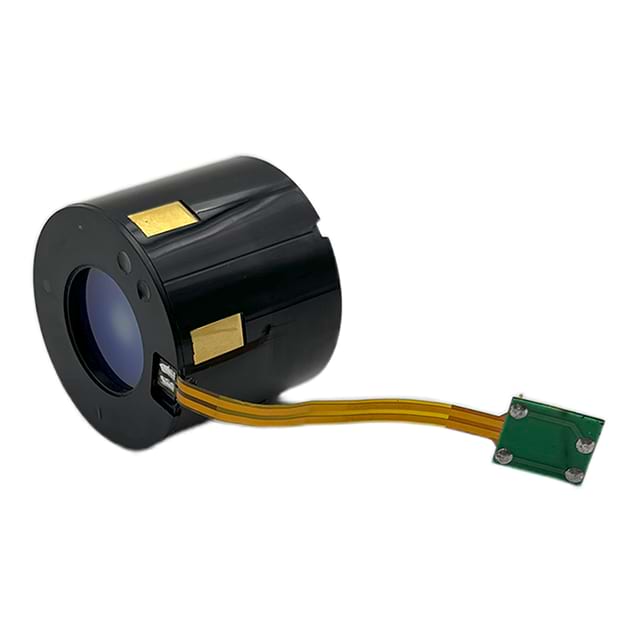
You must understand the "no two alike" principle before making a purchase. Identical housings can perform vastly differently in the field. Procurement relies entirely on evaluating the individual factory data sheet. Buying based purely on a brand name is a common mistake. You must demand the exact metric readouts for the specific unit you intend to buy.
Signal-to-Noise Ratio (SNR) and Resolution drive extreme low-light clarity. SNR is the most critical metric for deep dark performance. A high SNR means less static and a purer image. Modern Gen 3 tubes typically range from 18 to well over 30 SNR. Meanwhile, standard center resolution floors sit around 64 to 72 lp/mm. High resolution allows you to see fine details, like facial features or wire fences, at extended distances.
Environmental metrics dictate how the tube performs under mixed lighting. You must look at Equivalent Background Illumination (EBI) and Halo values. EBI measures the baseline glow of the tube itself. Lower EBI preserves deep-dark contrast. Halo constraints dictate performance against urban light pollution. When viewing streetlights or vehicle headlights, a tight Halo (ideally under 1.0mm) prevents light bloom from blinding you.
Auto-gating is a mandatory feature for modern dynamic lighting environments. Fast auto-gated power supplies rapidly toggle power to the tube in milliseconds. This protects the unit from sudden light flashes. It also retains crucial resolution during urban tactical operations. This makes auto-gating a critical feature for both tactical operators and aviation safety.
Specification | Definition | Acceptable Baseline | Premium Standard |
|---|---|---|---|
SNR | Signal-to-Noise Ratio (Clarity in dark) | > 20.0 | > 30.0 |
Resolution | Line pairs per millimeter (Detail) | 64 lp/mm | 72+ lp/mm |
EBI | Equivalent Background Illumination | < 2.5 | < 1.0 |
Halo | Bloom size around bright lights | < 1.25 mm | < 0.8 mm |
Navigating the market requires understanding the Omnibus (Omni) contracts. The U.S. military utilizes these procurement batches to outline generation leaps. Each Omni batch represents distinct upgrades in specifications and longevity. An Omni VII tube performs vastly differently than an Omni IV tube. Modern specifications often push tube lifespans up to 12,500 hours under standard conditions.
You must differentiate Aviation Grade from standard Ground Spec tiers. Aviation applications demand absolute perfection. Aviation Grade tubes require flawless edge resolution to read cockpit instruments clearly. They also mandate strict blemish control, meaning zero dark spots in the central viewing zones. Standard Mil-Spec or Commercial tiers allow minor blemishes. Industry professionals often separate these tiers based on the Figure of Merit (FOM). FOM is simply the SNR multiplied by the Resolution.
For many users, top-tier Gen 3 pricing exceeds practical needs. We highly recommend evaluating a Gen2+ Image Intensifier Tube as a viable alternative. Advanced Gen2+ technologies now offer highly competitive light sensitivity. They provide an excellent field of view for non-aviation applications. This makes them a cost-effective solution for budget-conscious agencies, rural law enforcement, or civilian hunters. You get reliable performance without paying the aviation premium.
Here are the primary performance tiers to consider:
Aviation Grade (Gen 3): Highest FOM, zero central blemishes, peak edge resolution. Best for flight operations.
Mil-Spec/Ground (Gen 3): High FOM, minor peripheral blemishes allowed. Best for tactical and patrol use.
Commercial (Gen 3): Moderate FOM, noticeable blemishes. Best for casual civilian use.
Gen2+ Alternative: Excellent cost-to-performance ratio. Best for budget-conscious agencies and hunters.
Professionals consider the MX10160 Image Intensifier Tube the gold standard for binocular systems. When building dual-tube setups like the DTNVG or RPNVG, uniformity is paramount. Auto-gain ensures both eyes receive the exact same brightness levels. If you used manual-gain tubes without complicated shared-gain circuitry, one eye might appear brighter than the other. This induces immediate visual fatigue. Therefore, panoramic systems like the GPNVG-18 natively rely on this auto-gain format.
Aviation compliance introduces a highly stringent regulatory environment. Rotary-wing procurement cannot rely on commercial-grade parts. Systems must adhere to strict FAA TSO (Technical Standard Order) compliance. Manufacturers rigorously test these tubes to ensure they survive extreme vibrations and altitude changes. Furthermore, the highest-performing tubes fall under strict ITAR export controls. You must verify local regulations before attempting international procurement.
We often field questions regarding monocular cross-compatibility. Dropping a 10160 format into a standard PVS-14 housing is a common use case. They share identical physical dimensions, making them physically compatible. However, you must understand the functional limits. By using an auto-gain unit in a PVS-14, you permanently sacrifice manual gain functionality. The manual brightness knob on the housing will simply do nothing. While the system will function safely, you lose granular control over your image brightness.
The secondary market holds numerous traps for uneducated buyers. You must protect your investment against deceptive vendor practices. The "clipped pigtail" deception is currently the most prevalent scam. Some vendors take manual-gain MX-11769 tubes and sever the ribbon cables. They then disguise and sell them as factory 10160s. This practice is extremely risky. It immediately voids original OEM warranties. If the tube fails, the manufacturer will refuse to service it.
You face serious physiological risks when using non-standard or mismatched tubes in binoculars. Native aviation tubes feature strict optical divergence tolerances. Clipped or rejected tubes rarely meet these precise alignments. Improper collimation and optical divergence mean the two images do not perfectly overlap. Your brain attempts to forcefully merge the divergent images. This causes severe eye strain, headaches, and visual fatigue during extended operations. It can even induce motion sickness.
To avoid these pitfalls, you must deploy strict verification tactics.
Request Original Data Sheets: Never buy a premium unit without its matching factory paperwork.
Check Solder Joints: Inspect the contact points. Untempered or messy solder joints often indicate a clipped and modified tube.
Verify Distributors: Only purchase from authorized dealers who honor OEM warranties.
Demand Collimation Proof: If buying a completed binocular, ask the builder for the collimation test report.
Acquiring the right night vision hardware demands rigorous attention to detail. You must look past the physical format and strictly evaluate the underlying metrics. Always prioritize FOM, SNR, and individual data sheet readouts over simple generation labels. A high-performing unit dramatically increases operational safety and target recognition in austere environments.
We strongly recommend aligning your chosen performance tier directly with your deployment environment. An Aviation Gen 3 unit serves high-speed tactical and flight environments flawlessly. Conversely, a high-spec Gen2+ unit provides exceptional value for rural hunting and budget-restricted agency patrols. Paying for specifications you do not need is just as detrimental as buying under-powered equipment.
Take proactive steps to secure your night vision capability. Request a professional consultation to discuss your specific mission parameters. Review current, data-sheet-verified IIT inventory to begin shortlisting your optimal components. A verified, properly vetted tube guarantees long-term performance and optical safety.
A: Yes, you can physically install it into a PVS-14 housing without adapters. However, because the tube lacks a manual gain control cable, you will permanently lose manual brightness control. The device will function strictly on auto-gain, and the brightness knob on the PVS-14 will become inactive.
A: Gen 3 tubes use a Gallium Arsenide photocathode, offering unmatched extreme low-light SNR and longevity. Gen2+ tubes use advanced multi-alkali photocathodes. While they have a lower SNR in pitch-black conditions compared to Gen 3, they offer an exceptional price-to-performance ratio for environments with ambient light.
A: Auto-gating rapidly adjusts the tube's power supply in dynamic lighting. It protects the sensor from sudden bright light flashes, like muzzle flashes or streetlights. This feature preserves image resolution and prevents temporary blindness when moving through mixed-light urban areas.
A: Lifespan depends on the specific generation and contract specifications. Modern military baselines dictate that these tubes typically last between 10,000 to 12,500 hours under normal operational conditions. Consistent exposure to extreme bright light can degrade this lifespan faster.


