
Language
Views: 0 Author: Site Editor Publish Time: 2026-05-06 Origin: Site


Night vision goggles have revolutionized the way we see in low-light environments, allowing us to see in total darkness by amplifying ambient light. Whether for military, security, or outdoor exploration, understanding how night vision goggles work is essential when selecting the right device for your needs. This article will break down the science behind night vision goggles, explaining their core components, the step-by-step process of image intensification, and how generational differences impact performance.
The ability to see in complete darkness is a remarkable feat, achieved through the amplification of light that is invisible to the human eye. Night vision goggles (NVGs) rely on advanced technology that intensifies ambient photons, including light in the near-infrared spectrum, to create a visible image. The fundamental principle behind night vision technology is the conversion of light into electrons, which are then amplified and converted back into visible light.
In a typical day, we are surrounded by an abundance of visible light, but at night or in complete darkness, the environment becomes devoid of enough light for our eyes to detect. This is where night vision goggles come in.
Ambient Photons: Night vision goggles rely on ambient light sources, such as stars, moonlight, or even infrared light that is invisible to the human eye. These photons enter the objective lens and are absorbed by the photocathode, a key component of the image intensifier tube (IIT).
Image Intensification: The photonic light is converted into electrons by the photocathode, and the Microchannel Plate (MCP) amplifies the electron stream. This amplification process ensures that the faint light that enters the goggles is strengthened, making it visible to the user.
The light intensification process in night vision goggles follows a well-defined sequence:
Capture: The ambient light, including photons from the surroundings, enters through the lens system.
Conversion: Photons are converted into electrons by the photocathode, which serves as the primary converter.
Amplification: The electrons are passed through the MCP, which multiplies the electron count to increase the signal strength.
Display: Finally, the amplified electrons strike the phosphor screen, which emits visible light, creating a clear image for the user to see.
This process allows for the visualization of objects in low-light and even in total darkness by amplifying the smallest traces of light.
Night vision goggles are intricate devices that rely on several critical components to ensure that they can deliver a clear and reliable image in darkness. The following are the essential elements that make night vision goggles function effectively:
Objective Lens: The first component of any night vision system, the objective lens gathers incoming light, including ambient photons, and directs them into the image intensifier tube.
Photocathode: Located inside the tube, the photocathode is responsible for converting incoming photons into electrons. The quality and sensitivity of the photocathode play a major role in determining how well the goggles perform in low-light conditions.
The Microchannel Plate (MCP) is the key component responsible for amplifying the electrons created by the photocathode. The MCP contains millions of tiny channels that amplify the electron stream by multiplying the number of electrons in the system. This is where the image intensifier tube does its magic by increasing the signal strength, resulting in a brighter, clearer image.
Phosphor Screen: Once the electrons are amplified, they strike the phosphor screen, which emits visible light as a result. This screen is the last step in the process before the light is visible to the user. The phosphor screen emits green or white light, depending on the phosphor material used, which determines the overall look of the image.
Eyepiece: The final component is the eyepiece, which allows the user to view the intensified image. The eyepiece adjusts the focus and magnification to suit the user’s needs.
Here’s a step-by-step breakdown of how night vision goggles process light to make images visible in the dark:
Step | What Happens | Effect |
Capture | Light enters the objective lens | Initial data is collected |
Conversion | Photons are converted into electrons | Foundation for amplification |
Amplification | MCP multiplies the electrons | Enhanced signal for clearer image |
Display | Phosphor emits visible light | Viewable output in the eyepiece |
This table illustrates the critical stages involved in the image intensification process.
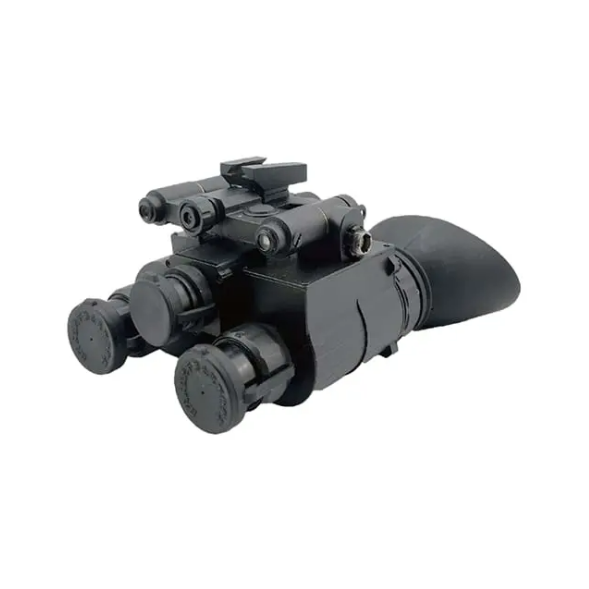
Over the years, night vision goggles have evolved significantly, with each generation offering improvements in sensitivity, resolution, and clarity. The most commonly available generations of night vision technology are Gen2+ and Gen3, with each offering unique benefits depending on the application.
Gen2+ tubes use multi-alkali photocathodes, which are suitable for general night vision tasks like surveillance and basic observation. These tubes provide good resolution and are cost-effective for non-critical applications.
Gen3 tubes, however, utilize Gallium Arsenide (GaAs) photocathodes, which offer significantly higher sensitivity to light, especially in near-infrared wavelengths. This makes Gen3 technology ideal for more demanding tasks such as search-and-rescue (SAR) missions or military operations, where clarity and detection range are crucial.
Gen2+ goggles are adequate for most civilian and security purposes where low light is the primary challenge. The performance may degrade in extreme darkness, making it harder to detect objects at longer distances.
Gen3 goggles, on the other hand, can detect objects in pitch-black environments, providing enhanced depth perception and clarity. These goggles are typically used in specialized fields, including military operations and high-risk search-and-rescue tasks, where performance in total darkness is paramount.
Night vision goggles are employed in a wide range of scenarios, and the choice of night vision goggles depends on the specific demands of the task at hand.
For security professionals patrolling dark environments or monitoring areas during the night, night vision goggles are invaluable. Gen2+ goggles are often used for general surveillance as they provide adequate performance for perimeter security, border patrol, or monitoring critical infrastructure.
In search-and-rescue (SAR) operations, where every second counts, having the ability to see in total darkness can be the difference between life and death. Gen3 night vision goggles are the preferred choice in these scenarios due to their superior sensitivity and clarity in near-total darkness.
Outdoor enthusiasts, such as hikers, campers, or wildlife researchers, benefit from night vision goggles that allow them to explore the outdoors after dark. Gen2+ goggles provide sufficient performance for most outdoor activities, while Gen3 goggles are ideal for wildlife observation, hunting, or exploring remote areas where visibility is minimal.
Understanding how night vision goggles work is the first step in making an informed decision about which device to purchase. Whether you need a cost-effective solution for general security or a high-performance option for SAR operations, the right choice of night vision goggles will significantly enhance your ability to see and operate in low-light conditions. At QCNV, we specialize in providing high-quality night vision goggles that deliver exceptional performance in the most demanding environments.
For more information on our products or to discuss your specific requirements, contact us today. We are here to help you choose the best night vision solution for your needs.
1. How do night vision goggles work in total darkness?
Night vision goggles work by amplifying ambient light, including near-infrared light, to create a visible image. The light is captured, converted into electrons, amplified, and then displayed on a phosphor screen.
2. What’s the difference between Gen2+ and Gen3 night vision goggles?
Gen2+ goggles offer reliable performance for general use, while Gen3 goggles provide superior sensitivity and clarity, making them ideal for critical applications like SAR and military operations.
3. How do I know which night vision goggles are right for my needs?
For general use or surveillance, Gen2+ goggles are sufficient. For demanding tasks requiring high clarity in total darkness, Gen3 goggles are the best option.
4. Can night vision goggles be used for military operations?
Yes, Gen3 night vision goggles are commonly used in military operations due to their superior performance in low-light environments, providing exceptional clarity and range for tactical purposes.


